

 العربية
 English
 français
 Deutsch
 русский
 español
 português
 日本語
日本語 한국의
한국의 中文
中文
نادراً ما تقتصر أنظمة الترددات اللاسلكية الحديثة على رف معدات واحد. ففي العديد من تطبيقات الاتصالات والبث والأقمار الصناعية والاستشعار، يجب تركيب الهوائيات أو مصادر إشارات الترددات اللاسلكية بعيداً عن معدات المعالجة الداخلية أو غرف المراقبة أو مرافق التحكم المركزية.
يُشكل هذا الفصل المادي تحديًا هندسيًا هامًا: كيف يمكن نقل إشارات الترددات اللاسلكية عبر مسافات أطول مع الحفاظ على جودة الإشارة المفيدة ومرونة النشر وتكاليف البنية التحتية التي يمكن التحكم فيها؟
لا يزال الكابل المحوري التقليدي مناسبًا للعديد من وصلات الترددات اللاسلكية القصيرة. مع ذلك، مع ازدياد طول الكابل وامتداد ترددات التشغيل إلى نطاق الجيجاهرتز، قد يصبح التوهين ووزن الكابل والتداخل الكهرومغناطيسي وتعقيد مساره من المشكلات المهمة. يوفر نقل الترددات اللاسلكية عبر الألياف الضوئية (RFoF) حلاً بديلاً، حيث يتم تحويل إشارات الترددات اللاسلكية إلى إشارات ضوئية لنقلها عبر الألياف، ثم تحويلها مرة أخرى إلى ترددات لاسلكية عند طرف الاستقبال.
بالنسبة للتطبيقات التي تعمل عبر نطاق تردد واسع، يمكن لأنظمة RFoF التي تدعم الإشارات حتى 6 جيجاهرتز أن توفر منصة نقل عملية للهوائيات البعيدة، والبنية التحتية اللاسلكية الموزعة، ومحطات الأقمار الصناعية الأرضية، وشبكات البث، وبيئات توزيع الإشارات الدقيقة.
لا يقتصر نقل إشارات الترددات الراديوية على مجرد توصيل جهاز بآخر، بل يمكن أن يؤثر وسيط النقل على تصميم النظام ومتطلبات الصيانة وأداء الإشارة بشكل عام.
مع استخدام كابلات محورية طويلة، قد تنشأ عدة مشاكل:
تكتسب هذه التحديات أهمية خاصة عندما يتطلب الأمر وضع الهوائيات في مواقع توفر استقبالًا مثاليًا للإشارة، مع ضرورة بقاء معدات المعالجة في موقع آمن وسهل الوصول إليه أو مركزي. ومن خلال نقل الجزء البعيد من مسار الإشارة من الكابل المحوري إلى الألياف الضوئية، يستطيع مصممو الأنظمة ابتكار بنى ترددات لاسلكية عن بُعد أكثر مرونة.
يتكون رابط RFoF عادةً من جهاز إرسال، ومسار ألياف ضوئية، وجهاز استقبال. عند الطرف البعيد أو طرف المصدر، يستقبل جهاز إرسال RFoF إشارة تردد لاسلكي واردة ويحولها إلى إشارة ضوئية. ثم تُنقل هذه الإشارة الضوئية عبر ألياف أحادية النمط. عند طرف الاستقبال، يحول جهاز استقبال RFoF الإشارة الضوئية مرة أخرى إلى خرج تردد لاسلكي كهربائي لتضخيمها أو مراقبتها أو خفض ترددها أو معالجتها لاحقًا.
توفر هذه البنية العديد من المزايا العملية لنقل إشارات الترددات اللاسلكية لمسافات طويلة:
نطاق التردد من من 5 ميجاهرتز إلى 6 جيجاهرتز يُعدّ هذا النظام مفيدًا للغاية لأنه يُغطي العديد من متطلبات نقل الترددات الراديوية في مجالات الاتصالات والبث والأقمار الصناعية والتطبيقات العلمية. فبدلًا من تصميم نظام نقل منفصل لكل نطاق ترددي ضيق، يُمكن للمهندسين النظر في منصة RFoF واسعة النطاق تُناسب سيناريوهات نشر متعددة.
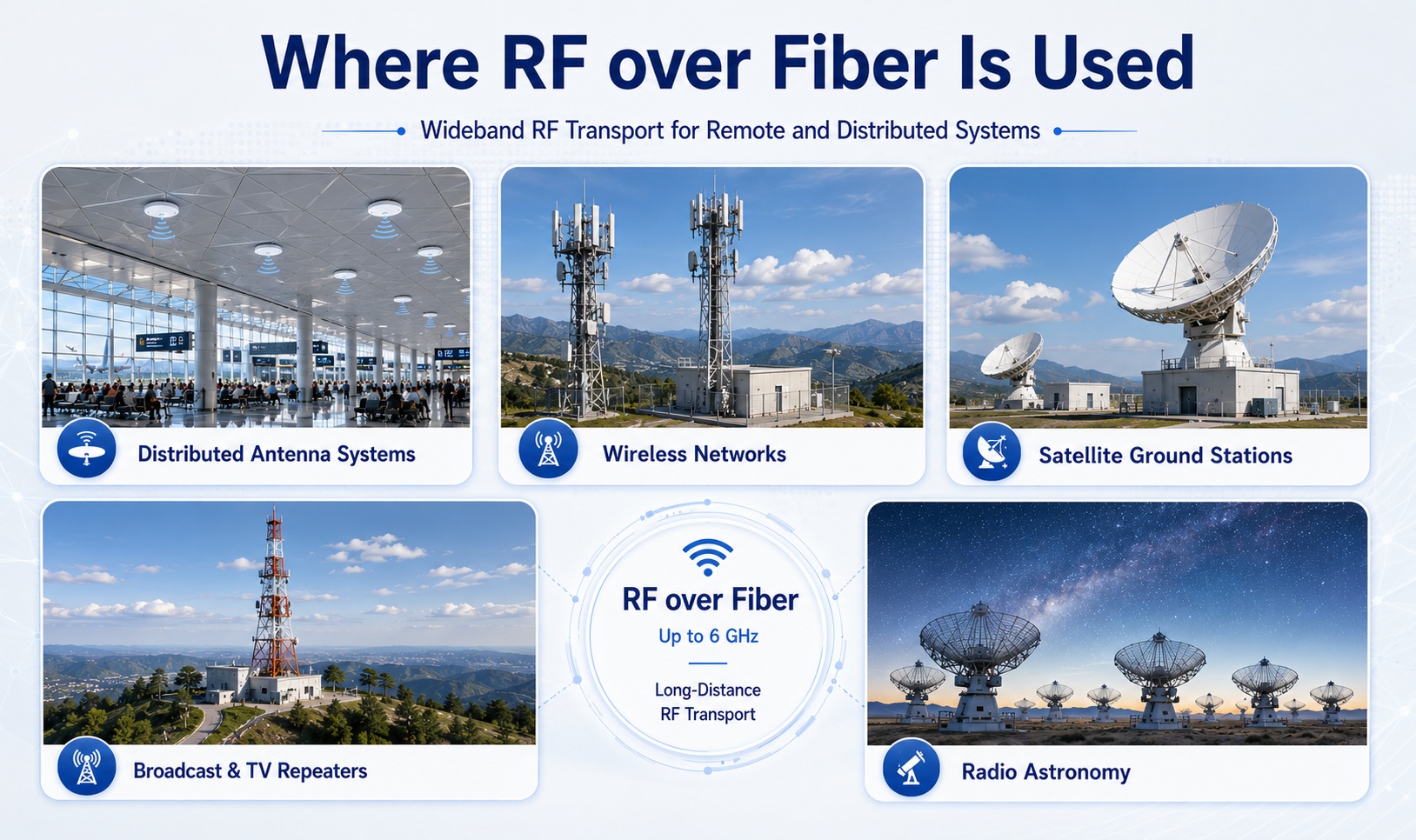
غالباً ما تتطلب أنظمة الهوائيات البعيدة تركيب الهوائيات على أسطح المنازل أو الأبراج أو في الأنفاق أو عبر الجامعات أو في الأماكن العامة الكبيرة، بينما تبقى معدات الترددات اللاسلكية ذات الصلة في غرفة معدات داخلية.
في هذه الحالات، قد تُعقّد مسارات الكابلات المحورية الطويلة عملية التركيب وتؤدي إلى زيادة فقدان الإشارة. تُمكّن تقنية RFoF من نقل إشارة الترددات اللاسلكية التي يتم جمعها أو توزيعها في موقع الهوائي عبر الألياف الضوئية إلى جزء آخر من المنشأة.
يُعدّ هذا الأمر بالغ الأهمية لأنظمة الهوائيات الموزعة (DAS)، حيث يجب توسيع نطاق تغطية الترددات اللاسلكية لتشمل المباني الكبيرة والملاعب ومرافق النقل والبيئات الصناعية. ويمكن لبنية نقل الترددات اللاسلكية القائمة على الألياف الضوئية أن تساعد في ربط نقاط الترددات اللاسلكية الموزعة بالمعدات المركزية، مع تقليل الاعتماد على كابلات الكابلات المحورية الضخمة ذات المسافات الطويلة.
بالنسبة للمكاملين الذين يقومون بتطوير أنظمة توزيع الترددات اللاسلكية عن بعد، فإن وصلة RFoF التي تدعم ترددات تصل إلى 6 جيجاهرتز توفر المرونة لنقل إشارات النطاق العريض داخل شبكات التغطية الحديثة داخل المباني وخارجها.
تعتمد البنية التحتية اللاسلكية بشكل متزايد على البنى الموزعة. قد تكون الهوائيات ونقاط تجميع الترددات اللاسلكية ومعدات معالجة الإشارات مفصولة بمسافات كبيرة، لا سيما في أنظمة توسيع التغطية ومرافق الاختبار والشبكات اللاسلكية الخاصة وبيئات مراقبة الشبكة.
يُعدّ رابط RFoF الذي يصل تردده إلى 6 جيجاهرتز مناسبًا للعديد من متطلبات نقل الإشارات اللاسلكية دون 6 جيجاهرتز. فهو يُساعد على نقل إشارات الترددات اللاسلكية بين مواقع الهوائيات البعيدة والمعدات المركزية دون الحاجة إلى تثبيت سلسلة معالجة الترددات اللاسلكية كاملةً عند كل نقطة هوائي.
بالنسبة لشبكات LTE والبنية التحتية المرتبطة بشبكات الجيل الخامس وأنظمة الاتصالات اللاسلكية الأخرى، يمكن أن تُسهّل إمكانية نقل البيانات عبر نطاق عريض تخطيط النظام. فبدلاً من حصر مسار نقل البيانات عبر الألياف الضوئية في تطبيق ضيق للغاية، يُمكن لتصميم RFoF ذي النطاق العريض أن يوفر مرونةً تتناسب مع تطور متطلبات الشبكة.
إن الفائدة الرئيسية ليست مجرد عرض النطاق الترددي؛ بل هي القدرة على وضع الهوائيات وفقًا لاحتياجات تغطية الترددات اللاسلكية مع وضع معدات المعالجة والتحكم والصيانة في المكان الأكثر عملية للتشغيل.
تعتمد مرافق الاتصالات عبر الأقمار الصناعية عادةً على هوائيات مثبتة في الهواء الطلق أو في مواقع نائية ذات رؤية واضحة للسماء. ومع ذلك، غالبًا ما يتم وضع معدات الاستقبال والمراقبة والمعالجة في أماكن داخلية لحمايتها وتسهيل صيانتها وإدارة النظام.
وهذا يخلق متطلباً طبيعياً لنقل الترددات اللاسلكية من الهوائي إلى غرفة المعدات.
يمكن لتقنية RFoF دعم هذه البنية من خلال نقل إشارات الترددات اللاسلكية المستقبلة أو الموزعة عبر الألياف الضوئية بين منطقة الهوائي والمعدات الداخلية. وتُعدّ مناعة الألياف الضوئية ضد التداخل الكهرومغناطيسي ذات قيمة خاصة في البيئات التي تحتوي على أنظمة ترددات لاسلكية متعددة، وبنية تحتية للطاقة، ومسارات كابلات طويلة.
بالنسبة لمحطات الأقمار الصناعية الأرضية ومنشآت الاتصالات عبر الأقمار الصناعية، يمكن النظر في استخدام وصلة RFoF عريضة النطاق عندما يحتاج المصممون إلى طريقة نقل مرنة عبر نطاقات تردد تتراوح من ميغاهرتز إلى غيغاهرتز. وتُعد التغطية حتى 6 غيغاهرتز ذات صلة بمجموعة متنوعة من مسارات إشارات الترددات اللاسلكية المستخدمة في بيئات الاتصالات عبر الأقمار الصناعية، وذلك تبعًا لتكوين النظام العام وخطة الترددات.
تتضمن أنظمة البث عادةً نقل الإشارة بين الاستوديوهات ومواقع الإرسال ومرافق إعادة الإرسال ونقاط المراقبة ومعدات التوزيع. وفي العديد من هذه التطبيقات، يجب أن تنتقل إشارة الترددات اللاسلكية بين مواقع منفصلة فعليًا قبل معالجتها أو تضخيمها أو إعادة إرسالها.
إن استخدام الألياف الضوئية لجزء النقل من مسار الترددات اللاسلكية يمكن أن يجعل عملية التثبيت أكثر سهولة، خاصة عندما تجعل مسافة الكابل أو الضوضاء الكهرومغناطيسية أو مساحة التوجيه المحدودة عمليات التشغيل المحورية الطويلة أقل جاذبية.
تُعدّ تقنية RFoF مفيدة أيضاً في بيئات البث التي تتطلب مراقبة مركزية أو وضع المعدات عن بُعد. وبفضل دعمها لنقل الترددات اللاسلكية واسعة النطاق، يُمكن لوصلة RFoF مساعدة جهات البث ومُكاملِي الأنظمة على تصميم توزيع إشارات أكثر مرونة دون التقيد بالوصلات القصيرة القائمة على النحاس.
بالنسبة لأجهزة إعادة بث التلفزيون الرقمي والبنية التحتية للبث ذات الصلة، فإن القدرة على نقل إشارات الترددات اللاسلكية عبر الألياف الضوئية يمكن أن تساهم في تصميم موقع أنظف وتنظيم أسهل لغرفة المعدات.
غالباً ما تتطلب تطبيقات علم الفلك الراديوي والاستشعار عن بعد وضع الهوائيات أو عناصر الاستقبال في مواقع مُحسَّنة لرصد الإشارات بدلاً من سهولة الوصول إلى المعدات. وقد يلزم بعد ذلك نقل الإشارات إلى أنظمة معالجة أو تحليل مركزية.
يمكن لهذه التطبيقات أن تولي أهمية خاصة لخصائص نقل الترددات اللاسلكية مثل عرض النطاق الترددي والخطية وسلوك الضوضاء وأداء الرابط المستقر.
تُعدّ تقنية RFoF ذات أهمية بالغة لأن الألياف الضوئية تسمح بنقل الإشارات عبر مسافات طويلة مع تجنب التداخل الكهرومغناطيسي على طول المسار البصري. وهذا يُمثّل ميزة معمارية هامة للتلسكوبات الراديوية وأنظمة القياس عن بُعد وغيرها من تطبيقات الاستقبال الحساسة.
قد تستفيد التطبيقات الدقيقة ذات الصلة، مثل أنظمة مزامنة الساعة والتردد، أيضًا من أساليب التوزيع القائمة على الألياف حيث يجب أن تمتد مسارات الإشارة عبر موقع أو بين مناطق المعدات.
على الرغم من أن كل عملية نشر علمية أو متزامنة لها متطلبات الأداء الخاصة بها، فإن روابط RFoF ذات النطاق العريض توفر لمصممي النظام خيار نقل مفيد لتقييم متى يتم فصل مصادر الترددات اللاسلكية ومعدات المعالجة فعليًا.
إن اختيار وصلة RFoF لا يقتصر على التحقق من الحد الأقصى للتردد. قد يدعم المنتج إشارات تصل إلى 6 جيجاهرتز، لكن مدى ملاءمة الوصلة يعتمد على بيئة الإشارة، والبنية المطلوبة، وظروف التكامل.
تشمل عوامل الاختيار المهمة ما يلي:
1. نطاق التردد
الشرط الأول هو ضمان أن يغطي رابط RFoF نطاق التشغيل المقصود. نطاق واسع مثل من 5 ميجاهرتز إلى 6 جيجاهرتز يمكن أن يكون ذلك مفيدًا للمشاريع التي تتضمن تطبيقات ترددات لاسلكية متعددة أو لتوسيع النظام في المستقبل.
يشير الكسب إلى مدى ارتباط مستوى خرج الترددات اللاسلكية بمستوى دخلها عبر الوصلة الضوئية. كما أن استواء الكسب مهم في أنظمة النطاق العريض لأنه يساعد في تحديد مدى اتساق نقل الإشارات عبر نطاق التردد المدعوم.
في البيئات التي تحتوي على عدة موجات حاملة للترددات الراديوية أو إشارات ذات مستويات طاقة مختلفة، تصبح الخطية مهمة. تساعد معايير مثل النطاق الديناميكي الخالي من التشويش وأداء الاعتراض من الدرجة الثالثة المهندسين على تقييم مدى ملاءمة وصلة ما لنقل إشارات الترددات الراديوية عالية المتطلبات.
في تطبيقات الهوائيات البعيدة والأقمار الصناعية والاستشعار، قد تكون خصائص الضوضاء ذات أهمية بالغة. لذا، ينبغي تقييم أي وصلة مصممة للعمل في بيئات ذات إشارات ضعيفة بعناية فائقة في ضوء ميزانية نظام الترددات اللاسلكية الكاملة.
ينبغي على مصممي الأنظمة التأكد من نوع الألياف، وشكل الموصل البصري، ومتطلبات الطول الموجي. وتُعد الألياف أحادية النمط، ووصلات FC/APC البصرية، وخيارات الطول الموجي 1310 نانومتر أو 1550 نانومتر من الاعتبارات الشائعة في تخطيط نشر تقنية RFoF.
تتطلب بعض التركيبات نقلًا مباشرًا للإشارات اللاسلكية من نقطة إلى نقطة، بينما قد تستفيد تركيبات أخرى من تصميمات متوافقة مع تقنية تقسيم الطول الموجي (WDM) أو بنى ثنائية الاتجاه أحادية الألياف. ويمكن أن يساعد اختيار حل RFoF المناسب لبنية الألياف في تبسيط عملية التركيب والاستفادة الأمثل من البنية التحتية الحالية.
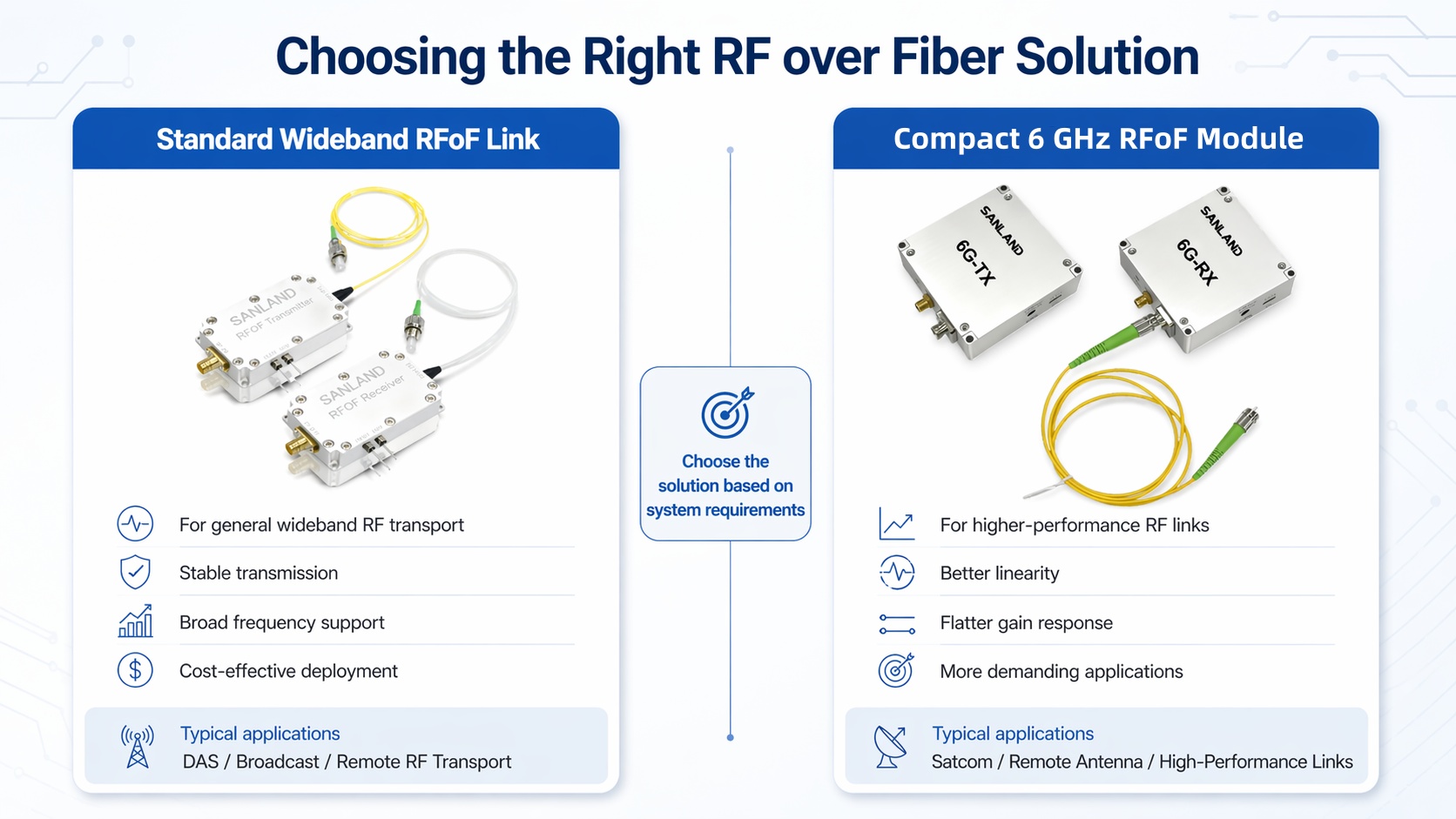
تقدم سانلاند حلولاً لتطبيقات نقل الترددات اللاسلكية التناظرية المدمجة من نقطة إلى نقطة. وحدة ترددات لاسلكية مدمجة بتردد 6 جيجاهرتز عبر الأليافتدعم هذه الوحدة نطاق ترددات الراديو من 5 ميجاهرتز إلى 6 جيجاهرتز، وهي مصممة لتحويل إشارات الراديو التناظرية إلى إشارات ضوئية والعكس. تشمل مواصفاتها المنشورة كسبًا اسميًا قدره 20 ديسيبل، ومستوى استجابة للكسب ±2.5 ديسيبل، ومقاومة راديوية 50 أوم، وتوصيلًا ضوئيًا من نوع FC/APC، وخيارات أطوال موجية 1310 نانومتر أو 1550 نانومتر. بفضل تصميمها المدمج وسهولة استخدامها، تُعدّ هذه الوحدة مناسبة لتطبيقات الاتصالات عبر الهوائيات البعيدة، والاتصالات عبر الأقمار الصناعية، والبث، والهوائيات الموزعة، والتلسكوبات الراديوية.
بالنسبة للأنظمة التي تتطلب مرونة معمارية أوسع، توفر سانلاند أيضًا وصلة ترددات لاسلكية عريضة النطاق عبر الألياف لنقل البيانات بترددات تتراوح بين 5 ميجاهرتز و6 جيجاهرتز. صُممت وصلة RFoF هذه لنقل إشارات الترددات الراديوية التناظرية والرقمية بشفافية عبر ألياف SM28 أحادية النمط. وهي تدعم أطوال موجية ضوئية 1310 نانومتر و1550 نانومتر، وتتوافق مع بنى الألياف أحادية الاتجاه القائمة على تقنية WDM. تشمل مجالات التطبيق المنشورة أنظمة الهوائيات الموزعة، وشبكات الاتصالات اللاسلكية، ومحطات الأقمار الصناعية الأرضية، وعلم الفلك الراديوي، ومكررات البث التلفزيوني الرقمي والإذاعي، وتوزيع إشارات الترددات الراديوية عن بُعد، وأنظمة مزامنة الساعة أو التردد.
يوضح هذان النهجان كيف يمكن اختيار منتجات RFoF وفقًا لأولويات النشر: نقل الإشارة التناظرية المضغوطة للروابط المباشرة من نقطة إلى نقطة، أو بنية وصلة واسعة النطاق لأنظمة الاتصالات والتوزيع الأكثر مرونة.
أصبح نقل إشارات الترددات اللاسلكية لمسافات طويلة ذا أهمية متزايدة مع تباعد الهوائيات ونقاط الترددات اللاسلكية الموزعة ومعدات المعالجة في أنظمة الاتصالات الحديثة والأقمار الصناعية والبث والأنظمة العلمية.
بينما يستمر الكابل المحوري في خدمة الاتصالات قصيرة المدى بشكل فعال، فإن تقنية الترددات اللاسلكية عبر الألياف الضوئية توفر بديلاً عمليًا للتطبيقات التي تصبح فيها المسافة أو وزن الكابل أو التداخل الكهرومغناطيسي أو مرونة التركيب اعتبارات مهمة.
مع وصول تغطية التردد إلى يصل إلى 6 جيجاهرتزيمكن لوصلات RFoF دعم مجموعة واسعة من التطبيقات، بما في ذلك الهوائيات البعيدة، وبنية DAS التحتية، وأنظمة الاتصالات اللاسلكية، ومحطات الأقمار الصناعية الأرضية، وشبكات البث، وبيئات علم الفلك الراديوي.
بالنسبة للفرق الهندسية التي تُقيّم نقل إشارات الترددات اللاسلكية لمسافات طويلة، ينبغي اختيار حل RFoF الأمثل وفقًا لتغطية التردد، وكسب الوصلة، وتجانس الإشارة، والضوضاء، والخطية، والواجهة البصرية، ومتطلبات بنية الألياف. ويمكن لوصلة نقل الترددات اللاسلكية المختارة بعناية والمبنية على الألياف أن تُسهم في تصميم نظام ترددات لاسلكية أكثر مرونة وقابلية للتوسع.



 شبكة IPv6 المدعومة
粤ICP备19046464号
شبكة IPv6 المدعومة
粤ICP备19046464号